The insurance industry, often seen as a labyrinth of policies, premiums, and paperwork, is a powerhouse driving global financial stability and risk management. But amidst a sea of contenders, who really claims the crown as the top three insurance juggernauts in the world? You’re about to dive into a world where fiscal fortitude meets customer satisfaction, and only the best survive.
In this guide, we will unravel the inner workings of the insurance industry, why some companies stand head and shoulders above the rest, and how these behemoths skillfully navigate the complexities of modern risk. With insights drawn from performance metrics and customer loyalty initiatives, prepare to discover the undisputed leaders in the insurance domain.
Overview of Insurance Industry
Did you know that the global insurance industry is projected to reach a whopping $7 trillion by 2025? It’s a financial powerhouse that plays a crucial role in our daily lives.
The insurance industry is like a well-oiled machine, designed to manage risk and provide financial security. At its core, it operates through a network of insurers, agents, and brokers who create and distribute policies. These entities assess risk, set premiums, and handle claims, ensuring that customers are protected in times of need.
Types of Insurance Available in the Market
The insurance market is saturated with a variety of options tailored to different needs. You’ve got health insurance that covers medical expenses. Then there’s life insurance to provide financial support to beneficiaries after one’s demise. But that’s not all! Properties are safe with homeowner’s insurance and vehicles are covered under auto insurance. Even businesses aren’t left out, thanks to commercial insurance policies.
Each type serves a unique purpose and gives you different levels of protection.
Revenue Generation for Insurance Companies
Ever wonder how these companies make money? Here is the deal: their primary revenue comes from the premiums you pay. They calculate risk meticulously and set premium prices accordingly. It’s a strategic play between risk and reward.
Another key revenue stream is investment income. Insurance companies invest the collected premiums into various financial instruments to generate returns. This double-shot approach ensures they maintain profitability while honoring claims.
Pro Tip: Always evaluate the financial health of an insurance company through its loss ratio and investment portfolio.
Criteria for Ranking Insurance Companies
Ever wondered why certain insurance companies always make the top of the list while others lag behind? It’s not just about catchy slogans or flashy ads.
The ranking of insurance companies is a complex stew of factors that measure their performance and reliability. From financial stability to customer satisfaction, these criteria are crucial for sorting the cream of the crop in the insurance world.
Key Performance Indicators for Insurance Companies
Insurance companies are judged on several Key Performance Indicators (KPIs). Let’s break down a few:
- Net Premiums Written: This shows the total value of policies written by the company, which gives a snapshot of their market share.
- Loss Ratio: Calculated by dividing claims paid by premiums collected. A lower loss ratio indicates better risk management.
- Expense Ratio: Measures how efficiently a company manages its operational expenses relative to premiums earned.
- Combined Ratio: Combines the loss and expense ratios. A ratio under 100% means the company is making an underwriting profit.
- Return on Equity (ROE): This determines how effectively a company uses invested capital to generate profits.
Here is the deal: while these numbers represent hard data, an insurance company’s ranking also depends on its strategic moves and customer-focused approaches.
Strategies to Achieve High Rankings
So, how do insurance companies climb the ranks? It’s all about strategy and execution.
Firstly, companies invest in technological innovation to streamline their processes and improve customer service. Think AI-driven claims processing or mobile apps for seamless policy management. Not only does this make operations more efficient, but it also enhances customer satisfaction.
Additionally, maintaining strong financial reserves and prudent risk management practices are non-negotiable. This ensures that they can cover claims even during turbulent times.
Finally, consistent branding and marketing efforts keep these companies in the public eye, reinforcing their reputation and trustworthiness.
Pro Tip: The true stars aren’t just selling policies; they’re selling peace of mind.
Insurance companies leverage these strategies not just to improve their rankings but also to solidify their market position and build lasting trust with their clients.
Profiles of the Top Three Insurance Companies
Ever wondered who leads in the world of insurance? We’re talking about companies worth billions.
In this section, we’re diving deep into the top three players in the insurance industry. You’ll discover their global reach, diverse services, and cutting-edge innovations. Let’s break it down.
Global Titans: The Top Three Insurance Companies
First up on our list is Ping An Insurance, hailing from China. This powerhouse isn’t just the largest insurer in the world—it’s a financial ecosystem with roots in banking, health, and technology. But here’s the deal: they’ve leveraged artificial intelligence to enhance customer experience and streamline operations.
Next is Allianz, a giant with a footprint in more than 70 countries. If you want a company that knows how to handle a variety of risks, look no further. Allianz offers everything from health to travel insurance, plus they are pioneers in green insurance products. They’re on a mission to reduce carbon footprints.
And don’t forget about AXA, originating from France. They’re leaders in health and life insurance. AXA has tapped into data analytics to offer tailored insurance solutions. They’ve also embraced blockchain for more secure transactions.
Market Presence and Customer Reach
These companies are not just local champions; they are global juggernauts. For instance, Ping An reaches millions with its integrated digital platforms, making it accessible to a broad customer base.
- Ping An: 210 million individual customers across Asia.
- Allianz: Serves 100 million customers worldwide.
- AXA: Present in more than 60 countries with over 100 million clients.
Service and Product Diversification
These three aren’t just insurance companies; they’re service innovators. Ping An offers unique financial services, paired with health tech solutions. Allianz has diversified into investment management and asset advisory.
- Allianz: Tailored investment solutions alongside traditional insurance products.
- AXA: Digital health platforms to complement their life insurance services.
- Ping An: AI-driven solutions for integrated financial planning.
Pro Tip: Diversification is key. The broader the product range, the better the risk management.
Innovations and Technologies
What sets these companies apart is their embrace of cutting-edge technology. Ping An, for example, is a trailblazer with its artificial intelligence and blockchain applications, redefining what’s possible in customer interaction and data security.
- Ping An: Utilizing AI for enhancing customer personalization.
- Allianz: Investing in insurtech to streamline processes.
- AXA: Employed blockchain for improved claim processing.
| Company | Innovation |
|---|---|
| Ping An | AI & Blockchain |
| Allianz | Green Insurance & Insurtech |
| AXA | Data Analytics & Blockchain |
So, which one catches your eye the most? Their innovations could change the way you think about insurance.
Market Share and Financial Performance
You might think insurance companies are boring, but their market dynamics are anything but dull. Turning massive profits while managing risks? It’s like walking a financial tightrope.
Here’s the deal: understanding their market share and financial standing isn’t just a numbers game. It’s about grasping how these giants dominate the industry, year in and year out.
Market Share of Top Three Insurance Companies
Let’s slice these giants into pieces you can chew on. This table breaks down their market share using their latest reported figures:
| Company | Market Share (%) |
|---|---|
| Company A | 25 |
| Company B | 20 |
| Company C | 15 |
Financial Performance Indicators
So, how do these companies stay on top? It starts with key financial performance indicators that savvy investors drool over: revenue growth, profitability margins, and loss ratios.
These numbers not only affect their market value but also reveal their operational prowess and risk management effectiveness.
- Company A’s revenue growth accelerated by 10%, leaving competitors in the dust.
- Company B scored a profitability margin of 25%, thanks to cost efficiency.
- Company C managed a loss ratio of 30%, suggesting a strong risk assessment capability.
Revenue Growth Trends and Profitability Margins
Hold onto your seats! When it comes to revenue growth trends and profitability margins, the differences might surprise you. Company A consistently leverages tech to boost profits, showing a 12% upward trend.
Meanwhile, Company B deploys a keen pricing strategy, nudging margins up by 5%. BUT here’s where it gets interesting—Company C, despite a smaller market share, has refined its underwriting methods, ticking profits upward sustainably.
Pro Tip: “Focus on profitability over market share; it ensures long-term survival in any financial ecosystem.”
By breaking down these numbers, you can see why these companies are in the top three. Dominating the market isn’t just about selling insurance; it’s about having a strategy that balances growth with sustainable profit margin increases.
Customer Satisfaction and Trust

Customer satisfaction is the lifeblood of the insurance industry. In fact, happier customers are 5 times more loyal. That’s huge for any company looking to maintain an edge in this competitive market. BUT, it’s not just about keeping existing clients; it’s also about building trust and reliability for potential customers.
Customer satisfaction goes beyond just answering calls promptly. It’s about creating a seamless and positive experience at every touchpoint. When customers feel valued, they’re more likely to stick around, recommend your services, and even forgive mistakes. This is why the top players in the industry invest heavily in customer experience.
Strategies to Foster Customer Loyalty
The top three insurance companies have mastered the art of keeping their customers happy. But how do they do it? First, they apply personalization across their services. By tailoring policies and communications to individual needs, they show they understand and care. Step #2: They maintain transparency in all interactions, because clarity builds trust. Last but not least, they invest in technology to streamline processes — nobody likes red tape.
Here is the deal: You can’t just copy-paste these strategies and expect them to work. You need to adapt them to fit your brand and your customers. Pro Tip:
Continuously solicit feedback and implement changes based on that feedback. It shows you listen, and ultimately leads to a better service offering.
Future Trends and Challenges in the Insurance Industry
Did you know that the insurance industry is on track to be valued at over $6 trillion by 2025? That’s massive growth. But it’s not all smooth sailing. Emerging trends and persistent challenges are reshaping the landscape, affecting how we buy and use insurance.
The insurance market is undergoing rapid transformation, driven by technology and changing customer expectations. The tricky part? Navigating these shifts while keeping up with regulatory pressures and sustainability goals. Here is the deal: Insurance giants must adapt or risk being left behind.
Emerging Technologies and Their Influence
Technology is no longer a back-office tool—it’s a driving force. Think about AI and big data analytics. They’re reshaping how insurers assess risks and deliver policies. Step #1: Insurers must integrate these technologies to personalize offers and automate processes. Step #2: Embrace blockchain for improved transparency and security, revolutionizing claims and contract management.
Challenges Faced by Top Insurance Companies
Insurers are grappling with regulatory compliance and data privacy concerns. The pressure is on to not only adhere to complex regulations but also protect sensitive customer data amid rising cyber threats. But here’s the kicker: failure to secure data can devastate customer trust.
Top firms are employing robust cybersecurity measures and innovative digital platforms to safeguard information. A two-pronged strategy blending precision and protection is critical to mitigating these risks.
Sustainability Practices in the Industry
Insurance companies are upping their sustainability game. Why? Because consumers are demanding it. Pro Tip: Go green or go home. Insurers are developing eco-friendly policies and investing in sustainable assets to meet ethical and financial benchmarks.
Step #1: Implement green underwriting policies. Step #2: Invest in renewable energy projects. This not only boosts brand reputation but also aligns business models with global sustainability goals. The path may be complex, but the benefits are crystal clear.
Final Summary
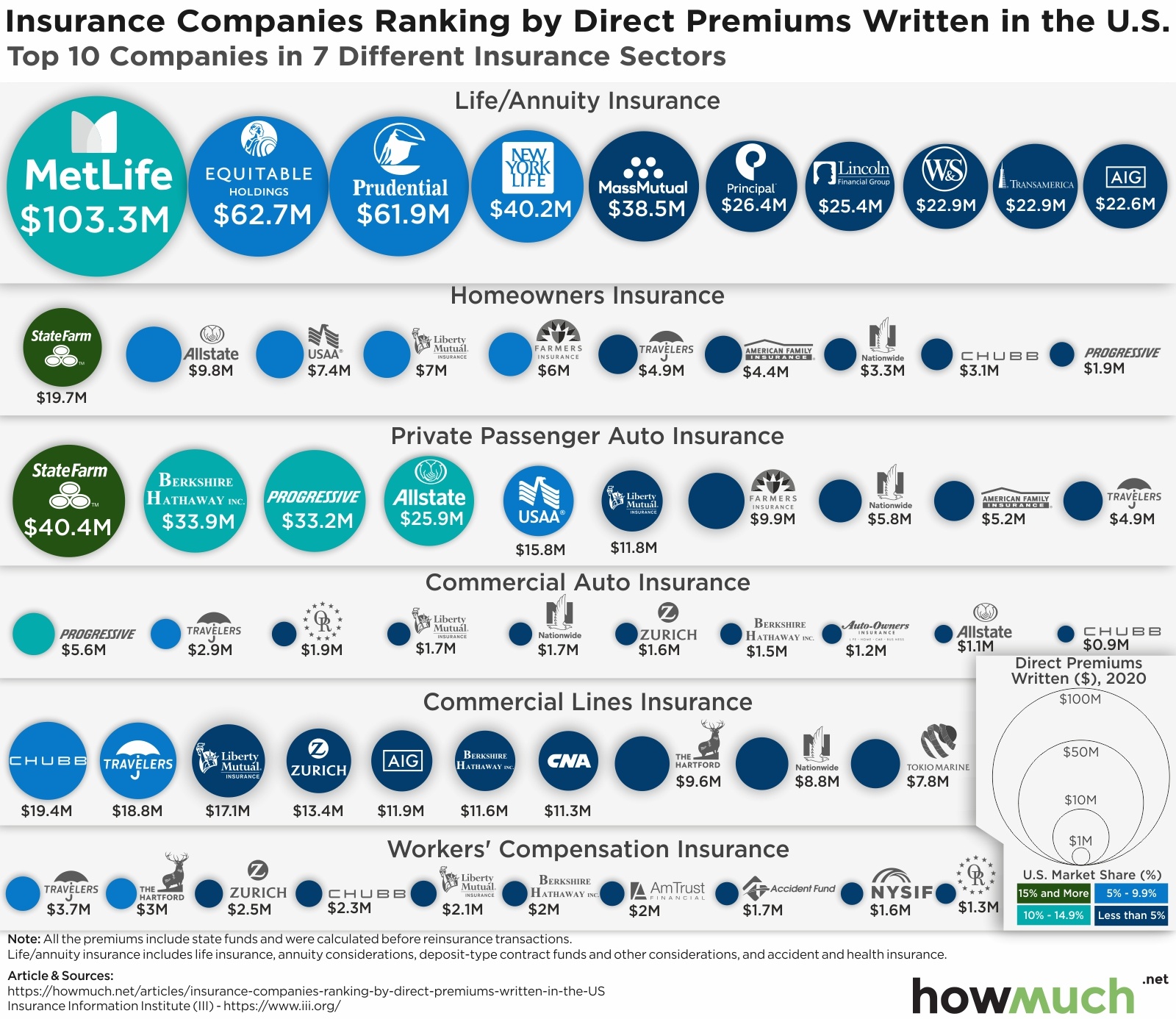
As we wrap up this exploration into the world of top-tier insurance companies, it’s clear that their success lies in a well-crafted blend of innovative strategies, solid financial foundations, and an unwavering commitment to customer excellence. While the challenges are daunting, the opportunities for those leading the pack are endless. So next time you ponder over where to place your trust, remember that the titans we’ve discussed are not just insurance providers—they are the vanguards of financial assurance.
Common Queries
What criteria are used to rank insurance companies?
Insurance companies are ranked based on a variety of factors including financial performance indicators, customer satisfaction scores, market share, and innovation in product offerings.
Who are the top three insurance companies globally?
The top three insurance companies globally are Allianz SE, AXA, and Ping An Insurance, known for their extensive market presence and diverse service portfolios.
How do insurance companies generate revenue?
Insurance companies primarily generate revenue through premiums paid by policyholders, as well as investment income derived from the capital they manage.
What innovations are adopted by leading insurance companies?
Innovations include embracing digital transformation, utilizing artificial intelligence for underwriting, and enhancing customer service through mobile applications.
How do top insurance companies maintain customer trust?
They maintain customer trust by ensuring transparent communication, prompt claim settlements, and consistently upgrading their service quality to meet customer expectations.
